Tall, Petite, or Curvy? Tricks Stylists Use to Create Proportion With Dresses
Stylists think about dresses differently than most shoppers do. Where most people look at a dress and ask whether they like it, a stylist looks at a dress and asks what it's going to do to the body wearing it. Will it lengthen? Will it balance? Will it draw the eye up or down? Will it create shape or follow it?
That's what proportion is really about. It's not about hiding anything or fitting a mold. It's about using the details of a dress, the neckline, hemline, waistline, fabric, and silhouette, to create a visual balance that makes the whole look feel intentional. Stylists do this every day, and the tricks they rely on are surprisingly straightforward once you know what to look for.
For Petite Frames
The goal with a petite frame isn't to look taller. It's to make sure the dress doesn't overwhelm the body. When a dress overpowers a smaller frame, the person disappears behind the fabric. When proportions are right, the person is what you notice first.
Stick to a defined waistline.
Empire waists, natural waists, and fitted bodices all help break the body into clear proportions. Drop waists tend to shorten the torso on petite frames, which works against the visual balance.
Avoid excessive volume in the skirt.
A full ball gown with layers of tulle can swallow a smaller frame. A-line silhouettes, columns, and fit-and-flare shapes give structure without bulk. If you love a fuller skirt, choose one with a moderate flare rather than maximum volume.
Use vertical details.
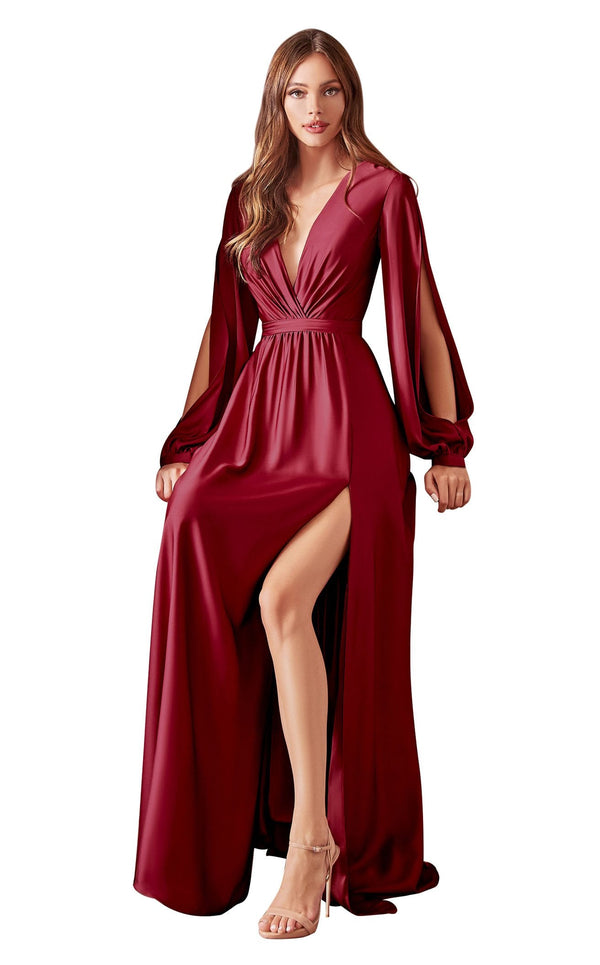
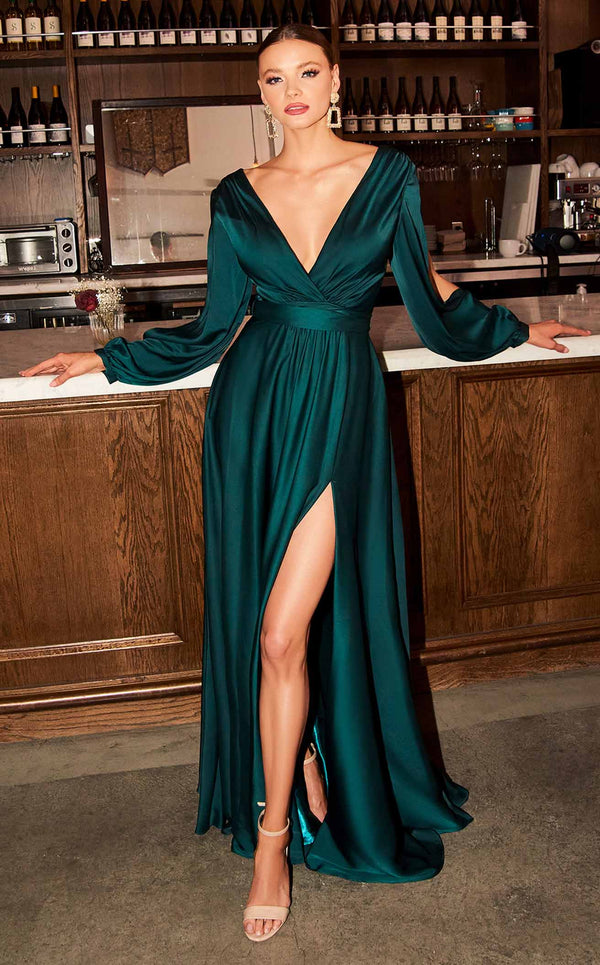
A V-neckline, a single slit, a column of beading down the center of a dress, all of these create a vertical line that the eye follows from top to bottom. That uninterrupted visual line elongates the frame naturally.
Mind the hemline.
For shorter dresses, just above the knee is usually the most proportional length for petite builds. For gowns, floor-length works beautifully as long as the dress isn't pooling on the ground. A slight heel underneath helps the dress hang correctly.
Keep embellishments in scale.
Oversized bows, very wide belts, and large floral appliques can dominate a petite frame. Smaller, detailed embellishments tend to complement the proportions better.
For Tall Frames
Tall frames have the advantage of carrying almost any silhouette well, but proportion still matters. The goal is usually to create visual interest and balance rather than just letting the height do all the work.
Embrace horizontal elements.
Where petite frames benefit from vertical lines, tall frames can afford to break up that length. Off-the-shoulder necklines, wide belts, color blocking, and A-line skirts all introduce horizontal movement that adds dimension to a longer frame.
Don't shy away from volume.
Ball gowns, dramatic sleeves, layered skirts, and full silhouettes all sit beautifully on taller builds without overwhelming the body. This is where a bigger, more statement-making dress can really come to life.
Use the hemline strategically.
Tall frames carry tea-length and midi-length dresses well, which is a range that can be tricky for petite builds. These hemlines create a proportional break at the calf that looks intentional and polished. Floor-length gowns work too, of course, but taller frames have more flexibility with length.
Play with necklines.
Boat necks, square necklines, and scoop necks all add width across the shoulders and chest, which balances a longer vertical line. Strapless styles work well too, drawing the eye across rather than up and down.

For Curvy Frames
Proportion on a curvy frame is about creating balance between the bust, waist, and hips. The goal is definition, making sure the dress acknowledges and works with the body's natural shape rather than fighting it.
Define the waist.
This is the single most effective proportion trick for curvy frames. A dress that cinches or fits closely at the waist creates an anchor point that gives the rest of the silhouette structure. Wrap dresses, belted styles, and bodices with boning or corsetry all do this well.
Use structure to your advantage.
Fabrics with some body to them, like crepe, structured satin, or duchess silk, hold their shape against curves rather than clinging to them. Very thin or lightweight fabrics without lining tend to cling in ways that can work against the proportional balance you're building.
Balance the top and bottom.
If you're fuller through the bust, a V-neck or sweetheart neckline creates an open line that draws the eye down and keeps the chest area from looking compressed. If you're fuller through the hips, an A-line or ball gown skirt balances that volume by distributing it evenly.
Don't default to oversized.
One of the most common mistakes is choosing a dress that's too big in the hope that looser equals more flattering. The opposite is usually true. A dress that fits well through the bust and waist and then flows from there will always look more polished than one that hangs shapelessly from the shoulders.
Ruching is your friend.
Ruched fabric across the waist or bodice creates gentle texture that smooths the visual line and adds interest. It's one of the most reliable details for making a dress look custom-fitted without any alterations.
Universal Tricks That Work Across All Body Types
Some proportion strategies work regardless of height or shape.
-
Monochromatic dressing elongates. A single color from top to bottom creates one unbroken line, which naturally makes the body look longer and leaner. This works for petite, tall, and curvy frames alike.
-
The right undergarments change everything. A well-fitted strapless bra, smoothing shapewear, or built-in cups can transform how a dress sits on the body. Stylists always account for what's underneath the dress, not just the dress itself.
-
Tailoring is the secret weapon. Even a small alteration, taking in a side seam, shortening a strap, adjusting a hem, can shift the proportions of a dress dramatically. Most stylists will tell you that an affordable dress that's been tailored to your body will look better than an expensive one that hasn't.
-
Know where you want the eye to go. Embellishment, color contrast, and structural details all draw attention. Place them where you want focus: a beaded neckline draws the eye up, a detailed waist draws the eye to your center, a dramatic skirt draws the eye down. Proportion is as much about directing attention as it is about fit.
The Takeaway
Proportion isn't about following rules for your body type. It's about understanding how the details of a dress interact with the body wearing it and making choices that feel balanced and intentional. Stylists aren't working with a different set of dresses than the rest of us. They're just paying closer attention to why certain combinations work.
Once you start thinking that way, shopping gets easier. You stop asking whether you like a dress in the abstract and start asking whether it's doing what you need it to do on your body. That shift makes all the difference.
Browse evening dresses, prom dresses, and formal gowns at NewYorkDress to find silhouettes that work with your frame. Or book an appointment at the NYC boutique for one-on-one styling guidance from a team that knows how to make proportion work for you.