What Is a Trumpet Dress? (And How It Differs From Mermaid & A-Line)
If you've ever searched for a fitted gown and found yourself toggling between "mermaid," "trumpet," and "fit-and-flare" without being entirely sure what separates them, you're not alone. These terms get used interchangeably all the time, even by retailers. But they're not the same silhouette. Each one flares at a different point on the body, and that difference changes everything about how the dress looks, feels, and moves.
The trumpet dress sits in a sweet spot that a lot of shoppers don't realize exists until they try one on. It's fitted, but not restrictive. It's dramatic, but not hard to walk in. Understanding what it actually is, and how it compares to the silhouettes on either side of it, makes shopping significantly easier.
What Is a Trumpet Dress?
A trumpet dress is fitted through the bodice, waist, and hips, then gradually flares out starting around the mid-thigh. The flare is smooth and progressive, widening steadily from the thigh down to the hem. The name comes from the shape it creates, which resembles the bell of a trumpet.
The key word is "gradual." Unlike silhouettes that hug the body all the way to the knee and then kick out sharply, the trumpet introduces its flare earlier and builds it slowly. The result is a shape that defines the waist and hips while still allowing real freedom of movement through the legs.
Trumpet dresses work beautifully in a wide range of fabrics. Crepe and satin give the silhouette a sleek, polished look. Lace and tulle add romance and texture. You'll find trumpet shapes across evening gowns, prom dresses, and bridal styles because the silhouette adapts well to almost any level of formality.
How a Trumpet Differs From a Mermaid
The mermaid and the trumpet are close cousins, but they flare at different points and create different effects.
A mermaid dress is fitted from the bodice all the way down through the hips, thighs, and knees. The flare doesn't begin until at or below the knee, sometimes as low as the mid-calf. The effect is a very body-conscious silhouette with a dramatic kick at the bottom.
A trumpet dress releases earlier, around mid-thigh. That earlier flare makes the transition from fitted to flowing feel more gradual and less dramatic. It still defines the body, but it gives the legs more room and creates a softer overall shape.
In practical terms, this means a trumpet dress is significantly easier to walk, sit, and dance in than a mermaid. Mermaid gowns can restrict movement through the knees and thighs, which is part of their appeal visually but can be a challenge over the course of a long event. Trumpet dresses offer a similar fitted look through the torso and hips without that same restriction below.
If you're drawn to the idea of a body-hugging gown but want to move comfortably all night, the trumpet is often the better choice. If you want maximum drama and a red-carpet level of curve definition and don't mind trading some mobility for it, the mermaid delivers that.
How a Trumpet Differs From an A-Line
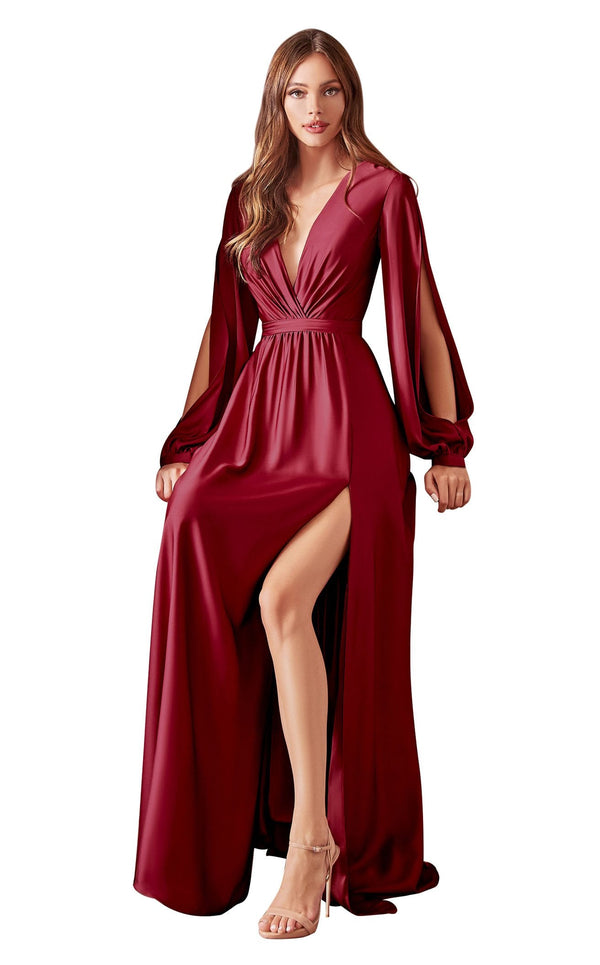
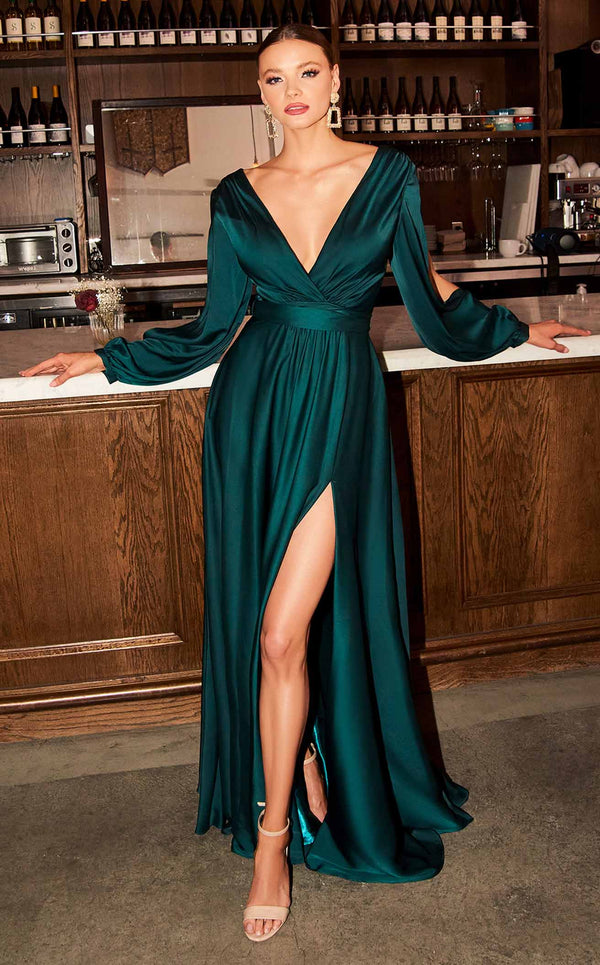
The difference between a trumpet and an A-line dress is more pronounced. An A-line is fitted at the bodice and waist, then flares gradually from the waist or just below it, forming the shape of the letter A. The skirt doesn't hug the hips or thighs at all. It flows freely from the waist down.
A trumpet, by contrast, stays fitted through the hips and into the upper thigh before it starts to flare. That means it shows more of the body's natural shape than an A-line does. The A-line creates curve through the skirt's structure. The trumpet follows the body's own curves and then adds movement below them.
A-line dresses are one of the most universally flattering and forgiving silhouettes in formalwear. They work on virtually every body type, they're easy to move in, and they're comfortable for all-day events. Trumpet dresses are more tailored and more form-fitting, which gives them a sleeker, more polished feel but requires a fit that works well through the hips and thighs.
If you want something fitted and defined, the trumpet is the stronger choice. If you want something that skims the body without hugging it, the A-line is the way to go. Both are available across formal gowns, cocktail styles, and Mother of the Bride dresses, so the choice really comes down to how much structure and body definition you want.
Who Does a Trumpet Dress Work Best For?
The trumpet silhouette is flattering on a wide range of body types, but it's especially strong on a few.
Hourglass figures tend to look great in trumpet dresses because the silhouette follows the natural waist-to-hip ratio and then releases into a flare that balances the proportions beautifully.
Pear-shaped bodies benefit from the way the trumpet defines the waist and then gradually widens from the thigh, creating a smooth, continuous line rather than emphasizing the widest point of the hips.
Tall frames carry the trumpet well because the elongated fitted section and the gradual flare have room to develop fully without the proportions feeling compressed.
Petite frames can wear trumpet dresses too, but the flare point matters. A trumpet that flares too low can shorten the visual line. Look for styles where the flare begins slightly higher on the thigh, and pair the dress with a heel to keep the proportions balanced.
When to Choose a Trumpet
The trumpet works across a wide range of events and dress codes. It's formal enough for a black-tie gala, polished enough for a wedding, and stylish enough for prom. It photographs well because the fitted-to-flared shape gives the camera clear lines and movement to work with.
It's also a strong choice when you want to feel pulled together without feeling locked in. The fitted bodice and hips give structure and definition, while the flared skirt allows you to walk naturally, sit comfortably, and move through a venue without constantly adjusting.
If you've tried mermaid dresses and loved the look but found them too restrictive, or tried A-lines and wanted something more tailored, the trumpet is worth trying on. It bridges the gap between those two silhouettes in a way that works for a lot of people who didn't realize there was a middle option.
The Quick Comparison
The simplest way to remember the difference: an A-line flares from the waist, a trumpet flares from the mid-thigh, and a mermaid flares from the knee or below. Each one gives you a different balance of structure, movement, and drama. None of them is objectively better than the others. It depends entirely on what you want the dress to do for you.
Explore trumpet and mermaid styles, A-line dresses, and evening gowns at NewYorkDress to see these silhouettes side by side. Or book an appointment at the NYC boutique to try all three and feel the difference for yourself.